Pill Identifier Guide 2026
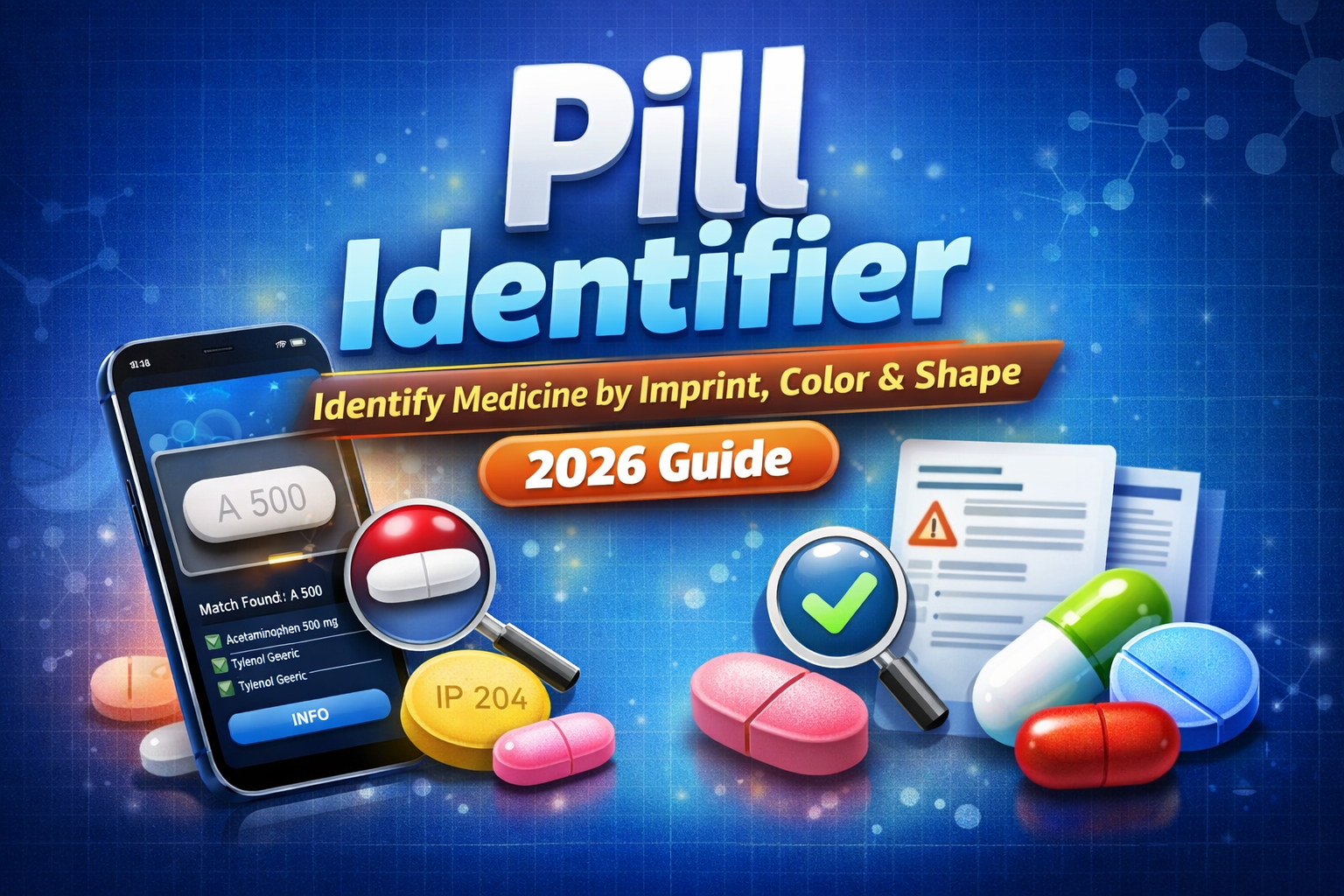

Finding an unknown pill can be confusing and sometimes dangerous. Many people come across loose tablets at home, in bags, or given by someone else, and they are unsure whether it is safe to take them. Identifying a pill correctly is extremely important because taking the wrong medicine can lead to side effects, allergic reactions, or serious health complications.
This complete guide will help you understand how to identify any pill using simple methods like imprint, color, shape, and size. It also explains how modern AI tools can make the process faster and more accurate.
Pill Identifier Basics
A pill identifier is a system or tool that helps recognize a medicine based on its physical appearance. Every legally manufactured medicine has unique characteristics that make it identifiable.
These include:
- Imprint code (letters or numbers)
- Color of the pill
- Shape and design
- Size and thickness
- Coating or texture
By combining these details, you can match a pill with the correct medicine in a database.
Why Identification Matters
Correct identification of medicine is not just useful, it is necessary for safety.
- Prevents accidental overdose
- Avoids taking the wrong drug
- Helps detect expired or fake medicine
- Useful for parents, elderly care, and emergencies
- Helps doctors understand what a patient has taken
Even a small mistake in medication can cause serious health risks, so identification should always be done carefully.
Step 1: Imprint Check
The imprint is the most important and reliable way to identify a pill. It is usually printed, engraved, or stamped on the surface of the tablet or capsule.
Examples:
- Dolo 650
- A 500
- IP 204
These codes are unique identifiers assigned by manufacturers. If a pill has a clear imprint, you can easily search for it in an online database or app.
If there is no imprint, identification becomes much harder and less reliable.
Step 2: Color Match
Color is another useful factor when identifying pills. Medicines are available in a wide range of colors such as white, blue, pink, yellow, and even multi-colored capsules.
However, color alone is not enough to confirm a pill because many different medicines may share the same color. It should always be used along with other factors like imprint and shape.
Step 3: Shape Type
The shape of a pill gives additional clues about its identity. Some common shapes include:
- Round tablets
- Oval or elliptical pills
- Capsule-shaped medicines
- Rectangular or oblong tablets
Certain brands use specific shapes consistently, which helps narrow down the possibilities.
Step 4: Size and Texture
Size and texture provide further details that help refine your search.
Check for:
- Small or large tablet size
- Smooth or rough surface
- Presence of a score line (split line)
- Coated or uncoated finish
These physical properties may seem minor but can significantly improve identification accuracy.
Step 5: Use Online Tools
The easiest and fastest way to identify a pill today is by using an online tool.
With a digital pill identifier, you can:
- Enter imprint details
- Select color and shape
- Upload an image of the pill
- Get instant matching results
You can try this tool: Download
AI Identification
Artificial Intelligence has made pill identification more advanced and user-friendly. Instead of manually searching, you can now simply scan a pill using your phone camera.
How it works:
- Take a clear photo of the pill
- The system analyzes imprint, color, and shape
- It compares data with a large database
- Shows possible matches instantly
This method is especially useful for quick identification and everyday use.
Common Errors
Many people make mistakes while identifying pills. These errors can lead to incorrect results.
Avoid the following:
- Ignoring imprint details
- Relying only on color
- Using low-quality images
- Guessing without verification
- Trusting unverified sources
Always double-check information before taking any medicine.
Safety Advice
Medicine safety should always be a priority.
- Never take unknown pills
- Consult a doctor if unsure
- Do not mix medicines without checking interactions
- Keep medicines in labeled containers
- Store them safely away from children
If you suspect a wrong medicine has been taken, seek medical help immediately.
Special Cases
Sometimes pills may be difficult to identify due to certain conditions.
No Imprint Pills
Some supplements or herbal medicines may not have imprints. These are harder to identify and should be handled carefully.
Damaged Pills
Broken or worn-out pills may lose their imprint, making identification difficult.
Fake Medicines
Counterfeit drugs may look similar but can be dangerous. Always buy medicines from trusted sources.
FAQ
Can I identify a pill without an imprint?
It is very difficult. Most reliable identification requires an imprint code.
Is it safe to take an unknown tablet?
No, you should never take medicine unless you are sure about its identity.
Are online pill identifiers accurate?
Yes, if correct details are provided, they can be highly accurate.
What should I do if I cannot identify a pill?
Do not take it. Consult a pharmacist or doctor for help.
Conclusion
Identifying a pill correctly is an important step in ensuring your safety and health. By checking the imprint, color, shape, and size, you can significantly reduce the risk of taking the wrong medicine.
Modern tools and AI technology have made the process faster and easier than ever. However, you should always verify results and consult a medical professional if there is any doubt.