Common Medicine Side Effects You Should Never Ignore
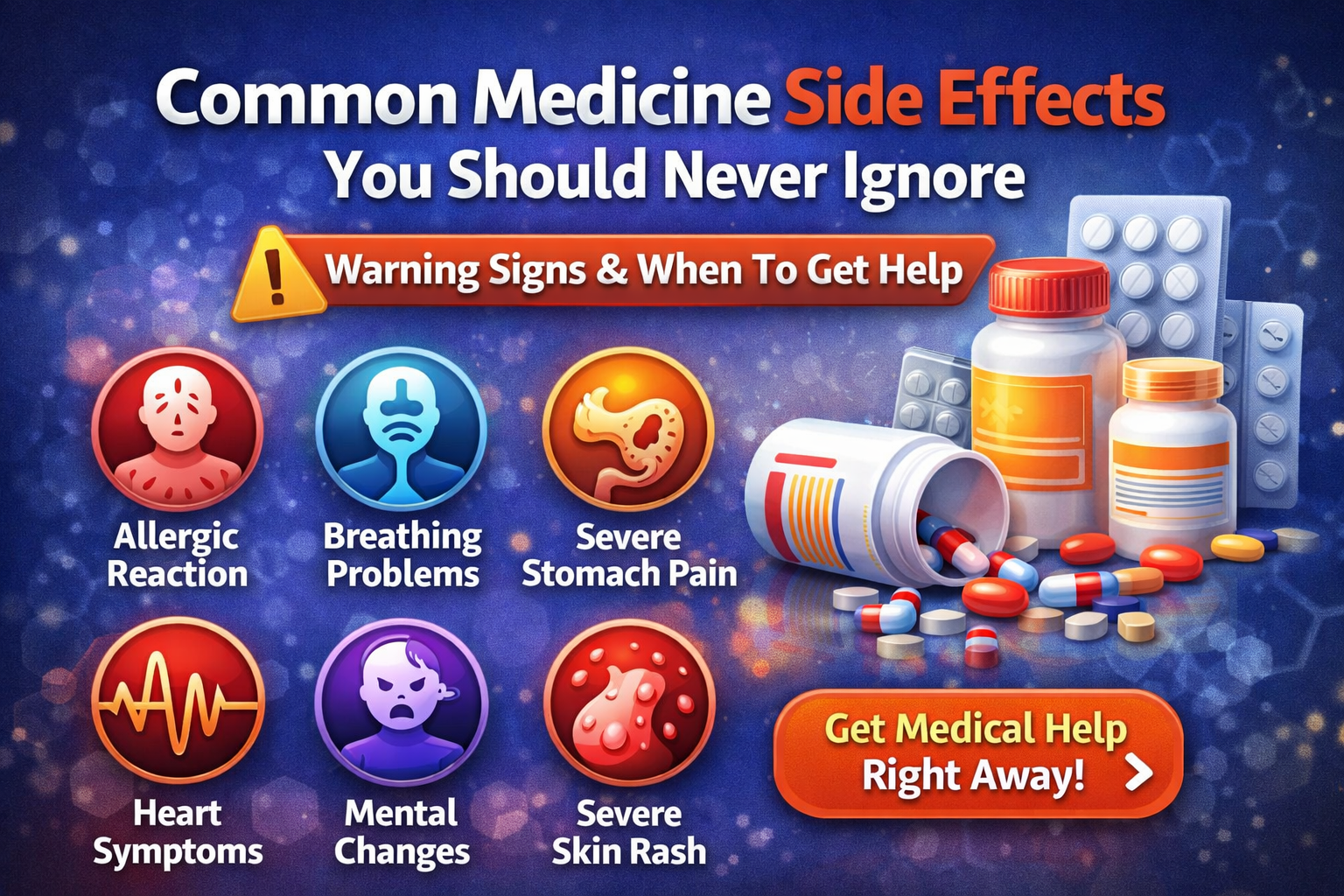

Medicines help treat illnesses and improve health, but they can also cause side effects. While many side effects are mild and temporary, some can be serious and should never be ignored.
Understanding the difference between common and dangerous side effects can help you take medicines safely and avoid complications. In this guide, you will learn about the most important medicine side effects, warning signs, and what actions to take.
What Are Medicine Side Effects?
A side effect is any unwanted reaction that occurs after taking a medicine. These effects can happen even when the medicine is taken correctly.
Side effects may vary depending on:
- The type of medicine
- Dosage
- Individual body response
- Age and health condition
Some people may experience no side effects, while others may react strongly.
Common Mild Side Effects
These side effects are usually not dangerous and often go away on their own:
- Nausea or vomiting
- Headache
- Drowsiness or dizziness
- Dry mouth
- Mild stomach pain
Although these are common, they should still be monitored. If they persist or worsen, consult a doctor.
Serious Side Effects You Should Never Ignore
1. Allergic Reactions
Severe allergic reactions can be life-threatening.
Warning signs:
- Skin rash or itching
- Swelling of face, lips, or throat
- Difficulty breathing
👉 Seek emergency medical help immediately if these occur.
2. Breathing Problems
Some medicines can affect your lungs or breathing.
Symptoms include:
- Shortness of breath
- Chest tightness
- Wheezing
This can be a serious condition and needs urgent attention.
3. Severe Stomach Issues
Certain drugs can irritate the stomach lining.
Watch for:
- Severe abdominal pain
- Blood in vomit
- Black or bloody stool
These may indicate internal bleeding.
4. Heart-Related Symptoms
Some medications may impact heart function.
Warning signs:
- Rapid or irregular heartbeat
- Chest pain
- Feeling faint or dizzy
These symptoms should never be ignored.
5. Mental or Mood Changes
Medicines can affect the brain and nervous system.
Symptoms include:
- Anxiety or panic
- Confusion
- Depression or mood swings
If you notice sudden mental changes, consult a doctor.
6. Skin Reactions
Some drugs cause serious skin conditions.
Look for:
- Severe rash
- Blisters
- Peeling skin
These may indicate a severe reaction and require immediate care.
Causes of Side Effects
Side effects can occur due to several reasons:
- Incorrect dosage
- Drug interactions
- Allergic sensitivity
- Long-term usage
- Pre-existing medical conditions
Understanding these causes helps in prevention.
Drug Interactions
Taking multiple medicines together can increase the risk of side effects.
Examples:
- Mixing painkillers with alcohol
- Combining antibiotics with other drugs
- Taking supplements with prescription medicine
Always check interactions before combining medicines.
How to Reduce Risk
You can minimize side effects by following simple precautions:
- Always follow prescribed dosage
- Read medicine labels carefully
- Avoid self-medication
- Inform your doctor about existing conditions
- Keep a list of medicines you take
When to See a Doctor
You should consult a doctor if:
- Side effects become severe
- Symptoms do not go away
- You notice unusual reactions
- You accidentally take the wrong medicine
Never ignore warning signs.
Role of Medicine Identification
Sometimes side effects occur because the wrong medicine is taken. Identifying pills correctly can prevent this problem.
You can use an online tool to:
- Identify unknown pills
- Check medicine details
- Avoid incorrect usage
Try: https://pillidentifier.novaicore.com/
Frequently Asked Questions (FAQ)
What are the most common medicine side effects?
Common effects include nausea, headache, dizziness, and drowsiness.
Are all side effects dangerous?
No, many are mild, but some can be serious and require medical attention.
Can I stop medicine if I feel side effects?
Do not stop without consulting a doctor.
How can I know if a side effect is serious?
If it affects breathing, heart, or causes severe pain, seek help immediately.
Conclusion
Medicine side effects are common, but not all of them are harmless. Knowing which symptoms to watch for can help you act quickly and avoid serious health risks.
Always take medicines responsibly, follow medical advice, and never ignore unusual symptoms. Your safety should always come first.