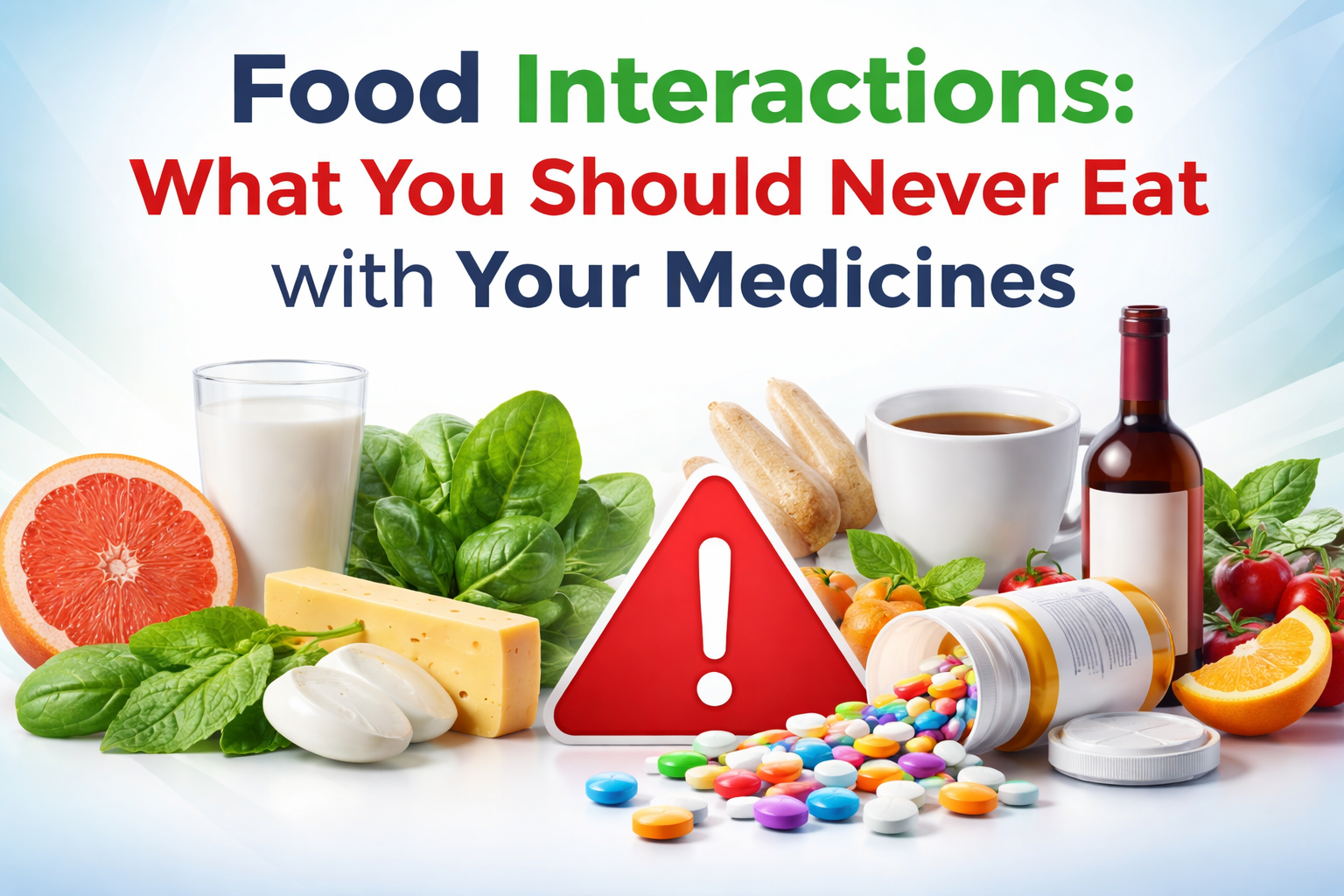
Food Interactions: What You Should Never Eat with Your Medicines

Introduction
Many people take medicines daily without realizing that certain foods can affect how those medicines work. Even healthy foods like fruits, dairy, or green vegetables can interfere with drug absorption, effectiveness, or safety.
In this guide, you will learn about common drug and food interactions, foods to avoid with specific medicines, and how to take medications safely.
What Are Drug and Food Interactions?
Drug and food interactions occur when food affects the way your body absorbs, processes, or uses a medicine. This can:
- Reduce the effectiveness of the drug
- Increase the risk of side effects
- Cause unexpected health problems
These interactions can happen with prescription drugs, over-the-counter medicines, and even supplements.
Common Drug and Food Interactions
Grapefruit and Medicines
Grapefruit and grapefruit juice can interfere with enzymes that break down medicines in your body.
Affected medicines include:
- Cholesterol drugs (statins)
- Blood pressure medications
- Anti-anxiety medicines
This can lead to higher drug levels and increased side effects.
Dairy Products and Antibiotics
Milk, cheese, and other dairy products can bind with certain antibiotics, reducing their absorption.
Affected drugs:
- Tetracycline
- Ciprofloxacin
This can make the antibiotic less effective in treating infections.
Green Leafy Vegetables and Blood Thinners
Vegetables like spinach, kale, and broccoli are high in vitamin K.
When taken with blood thinners such as warfarin, they can reduce the drug’s effectiveness and increase the risk of blood clots.
Alcohol and Medications
Alcohol can interact with many medicines, including:
- Painkillers
- Antibiotics
- Antidepressants
Possible effects include:
- Drowsiness
- Liver damage
- Increased side effects
Caffeine and Stimulant Drugs
Caffeine found in coffee, tea, and energy drinks can increase the effects of certain medicines.
Affected drugs:
- Asthma medications
- Some antibiotics
This can lead to nervousness, rapid heartbeat, and sleep problems.
Signs of Drug and Food Interactions
- Nausea or vomiting
- Dizziness
- Stomach pain
- Unusual fatigue
- Rapid or irregular heartbeat
If you experience these symptoms after eating and taking medication, consult a healthcare professional.
How to Avoid Drug and Food Interactions
- Always read medicine labels and instructions
- Take medicines exactly as prescribed
- Ask your doctor or pharmacist about food restrictions
- Avoid mixing alcohol with medications
- Use a reliable pill identifier and drug guide tool
Best Practices for Taking Medicines
- Take medicines with water unless advised otherwise
- Follow timing instructions (before or after meals)
- Maintain a consistent diet if you are on long-term medication
- Keep a list of all medicines and supplements you use
Conclusion
Drug and food interactions can silently affect your health if ignored. Understanding what foods to avoid with your medications is essential for safety and effectiveness.
Always stay informed, follow medical advice, and use trusted tools to manage your medications properly.